



Ultime notizie Distinguere i materiali di imballaggio in carta di alta qualità-01/04
Come distinguere i materiali di imballaggio in carta di alta qualità
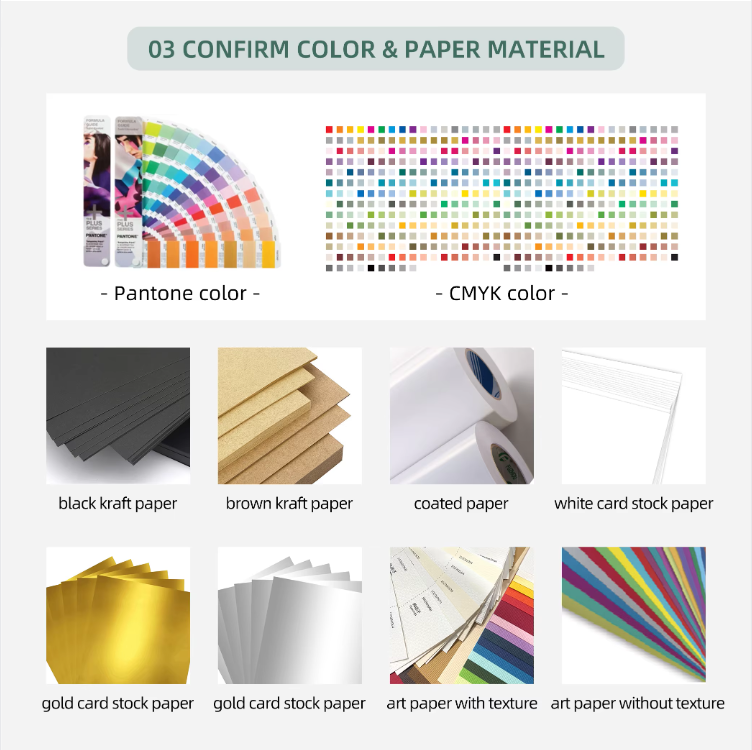
1. Materiali di imballaggio in carta di alta qualità – Partiamo dai tipi di materiale di base: scegli la base giusta
– Cartoncino patinato (cartoncino grigio / cartoncino bianco)
- Caratteristiche di alta qualità: Struttura densa e uniforme, senza spazi visibili tra le fibre; spessore del rivestimento omogeneo (senza sfaldature o screpolature); struttura rigida che resiste alla flessione.
- Controllo delle chiavi: Eseguire una “prova di flessione”: piegare delicatamente il cartoncino. Un cartoncino patinato di alta qualità torna alla forma originale senza rompersi, mentre uno di bassa qualità presenterà pieghe permanenti o si spaccherà.
– Carta ondulata (carta kraft + strato ondulato)
- Caratteristiche di alta qualità: Ottimo legame adesivo tra il rivestimento e l'onda (nessuna delaminazione quando sottoposta a trazione); strati dell'onda spessi e robusti (onda A per l'assorbimento degli urti, onda B per la resistenza alla compressione, onda E per gli espositori da negozio); perforazioni dell'onda pulite e regolari.
- Controllo delle chiavi: Strappate una piccola parte del foglio. La carta ondulata di alta qualità presenterà strappi netti e fibrosi (non rotture fragili) e la struttura ondulata rimarrà intatta anziché collassare.
– Carta Kraft (non patinata / riciclata)
- Caratteristiche di alta qualità: Fibre spesse e resistenti, con una quantità minima di polvere o residui; tonalità di colore uniforme (senza macchie irregolari); elevata resistenza alla trazione che impedisce lo strappo quando il tessuto è bagnato o sottoposto a trazione.
- Controllo delle chiavi: Strofinare delicatamente la superficie. La carta kraft di alta qualità non lascia residui sulle dita e resiste ai graffi meglio rispetto alle varianti di qualità inferiore.
– Carta speciale (carta di bambù, carta di canapa, carta patinata metallizzata)
- Caratteristiche di alta qualità: Consistenza di alta qualità (finitura morbida, opaca o lucida); spessore uniforme; riproduzione vivace dei colori nei disegni stampati; nessun scolorimento o sbiadimento nel tempo.
2. Materiali di imballaggio in carta di alta qualità: valutare le caratteristiche fisiche: toccare, osservare e testare
– Consistenza e morbidezza
- Di alta qualità: Consistenza liscia e uniforme, priva di irregolarità, fori o fibre sporgenti. Le carte patinate devono presentare una finitura omogenea e non appiccicosa; le carte non patinate devono risultare morbide al tatto senza essere fragili.
- Di bassa qualità: Superfici granulose e irregolari; imperfezioni visibili; oppure un rivestimento “ceroso” che si stacca facilmente.
– Spessore e peso
- Confezionamento alimentare: cartoncino patinato da 250-400 gsm (adatto al contatto con gli alimenti, a tenuta stagna).
- Spedizioni nell'e-commerce: carta ondulata da 120-200 gsm (leggera ma in grado di assorbire gli urti).
- Regali di lusso: cartoncino patinato di grammatura compresa tra 350 e 600 gsm (rigido, al tatto di alta qualità).
- Controllo delle chiavi: Utilizzare un calibro (misuratore di spessore della carta) per verificare l'uniformità. La carta di alta qualità presenta variazioni minime di spessore su tutta la superficie del foglio, mentre quella di bassa qualità può presentare punti più sottili che ne indeboliscono la struttura.
– Resistenza allo strappo e alla trazione
- Prendi una striscia di carta e strappala lentamente.
- Di alta qualità: Lo strappo avviene in modo graduale, con fili di fibra visibili (non si verifica una rottura netta e fragile). La carta resisterà allo strappo finché non verrà esercitata una forza significativa.
- Di bassa qualità: Si spezza in modo netto con poca forza, oppure lascia un bordo frastagliato e fragile che può spezzarsi ulteriormente sotto pressione.
- Versa qualche goccia d'acqua sulla carta. Una carta resistente all'acqua di alta qualità respingerà l'umidità (formando delle goccioline) o la assorbirà lentamente senza sfaldarsi. Una carta di bassa qualità si deformerà, si ammorbidirà o si strapperà immediatamente.
– Stampabilità e solidità del colore
- Di alta qualità: Stampe dai colori nitidi e vivaci; nessuna sbavatura, sbavatura laterale o sbiadimento; l’inchiostro aderisce saldamente alla superficie (effettuare una “prova di resistenza al graffio”: strofinare delicatamente la stampa con un dito; l’inchiostro non deve trasferirsi).
- Di bassa qualità: Stampe sbiadite o sfocate; macchie d’inchiostro al tatto; oppure scolorimento dopo l’esposizione alla luce solare (verificare esponendo un campione alla luce solare diretta per 1 ora: non deve presentarsi alcuno sbiadimento visibile).
3. Materiali da imballaggio in carta di alta qualità: valutazione delle prestazioni in condizioni reali
– Resistenza alla compressione
- Utilizzate un tester di compressione (oppure effettuate una semplice prova con un peso: posizionate un peso di 5 kg su una piccola scatola campione). Un imballaggio di alta qualità sosterrà il peso senza cedere né deformarsi.
- Gli imballaggi di scarsa qualità si deformano, si incurvano o crollano anche sotto un peso minimo.
– Resistenza all’umidità
- Lascia un campione di carta in un ambiente umido (ad esempio, un bagno) per 24 ore. La carta di alta qualità manterrà la sua forma e resistenza; quella di bassa qualità si deformerà, si ammuffirà o diventerà fragile.
- Per le spedizioni internazionali (soggette a condizioni climatiche variabili), è opportuno privilegiare rivestimenti o trattamenti resistenti all'umidità (ad esempio, la laminazione a base acquosa) per proteggere il prodotto contenuto all'interno.
– Resistenza alle pieghe e alle ammaccature
- Piega la carta più volte lungo una linea retta. Una carta di alta qualità formerà una piega netta e ben definita che manterrà la sua forma senza strapparsi.
- La carta di scarsa qualità si strappa lungo la piega, presenta ammaccature permanenti o non rimane piegata.
4. Materiali di imballaggio in carta di alta qualità: dare priorità alla sostenibilità, un segno distintivo della qualità moderna
– Contenuto riciclato
- Carta riciclata di alta qualità: Realizzato con rifiuti post-consumo (PCW), ma mantiene resistenza e stampabilità (senza eccessiva fragilità o scolorimento). Verificate la presenza di certificazioni quali FSC (Forest Stewardship Council) o PEFC (Programma per il riconoscimento della certificazione forestale) per garantire un approvvigionamento responsabile.
- Carta riciclata di bassa qualità: Sottile, fragile, con un elevato contenuto di polvere; può contenere impurità non trattate che compromettono la qualità di stampa e la sicurezza.
– Biodegradabilità e compostabilità
- Per i marchi impegnati nella politica “zero rifiuti”, scegliete carta che sia 100% biodegradabile o compostabile in casa (certificato secondo la norma ASTM D6400 o EN 13432). La carta compostabile di alta qualità si degrada naturalmente nell'ambiente senza lasciare microplastiche.
- Evitare la carta trattata con rivestimenti non biodegradabili (ad esempio, la plastificazione) che compromettono gli obiettivi di sostenibilità.
– Impatto ambientale minimo
- Cerca carta prodotta con energia rinnovabile (ad esempio, energia eolica o solare) e con processi di produzione a zero rifiuti. I marchi che danno priorità alla sostenibilità spesso pubblicano rapporti trasparenti in materia: utilizzali come strumento di valutazione.
5. Materiali di imballaggio in carta di alta qualità: affidatevi alle certificazioni di enti terzi e alle credenziali dei fornitori
- Certificazioni in materia di sicurezza alimentare: FDA (Stati Uniti), EFSA (UE) o GB 4806 (Cina) per gli imballaggi a contatto con gli alimenti.
- Certificazioni ambientali: FSC, PEFC o B Corp (per i marchi sostenibili).
- Standard di gestione della qualità: ISO 9001 (garantisce processi di produzione uniformi).
Lista di controllo finale: come verificare la qualità prima di effettuare l'ordine
- Richiedi campioni: Prima di effettuare un ordine all'ingrosso, provate sempre dei campioni di carta: verificatene la consistenza, lo spessore, la stampabilità e le prestazioni.
- Eseguire prove pratiche: Piegare, strappare, graffiare ed esporre i campioni all'acqua e all'umidità per valutarne la resistenza.
- Verifica le certificazioni: Verificare la documentazione relativa alle certificazioni FSC/PEFC, alla sicurezza alimentare e alla norma ISO 9001.
- Valutare la qualità di stampa: Verificare che le stampe personalizzate non presentino sbavature, scolorimento e che abbiano una buona adesione.
- Valutare la sostenibilità: Verificare la presenza di materiale riciclato, la biodegradabilità e la produzione responsabile.
Conclusione
Per individuare materiali di imballaggio in carta di alta qualità occorre combinare test tecnici, valutazioni delle prestazioni pratiche e la coerenza con i valori di sostenibilità e del marchio. Concentrandosi sul tipo di materiale, sulle caratteristiche fisiche, sulle prestazioni concrete e sulle credenziali ecologiche, è possibile scegliere imballaggi che proteggano i propri prodotti, valorizzino l’identità visiva del marchio e trovino riscontro presso i clienti attenti all’ambiente.
Ricorda: un imballaggio in carta di qualità è un investimento, non solo per proteggere i tuoi prodotti, ma anche per costruire la fiducia nel marchio nel lungo periodo. Che tu stia cercando soluzioni per regali di lusso, spedizioni e-commerce o prodotti alimentari sostenibili, dare priorità ai materiali di qualità garantirà che il tuo imballaggio si distingua per tutti i motivi giusti.